Floor Heating
Trench heating keeps floor-to-ceiling windows comfortable without giving up a single panel of wall space.
Fully discreet • Custom-matched grilles • Built for expansive glazing
A hydronic convector sits inside a purpose-built trench beneath the floor, hidden under a custom grille that matches your flooring. As cold air spills off large glazing, it drops into the trench, warms against the convector, and rises back into the room — helping reduce cold downdraughts from large glazed areas without adding a single visible panel.
Cross-section — cool air descends, convector, warm air rises
01
Cold air spilling off the glass falls to the floor and into the trench.
02
Air passes across the hydronic convector hidden inside the trench.
03
Warmed air rises back past the glazing line, keeping the room even.
Full-height windows lose heat fast at the sill — trench heating intercepts the draught before it reaches the room.
No wall-mounted unit, no floor-standing radiator — the whole system sits below the finished floor.
A discreet fit for pared-back interiors where every visible surface matters.
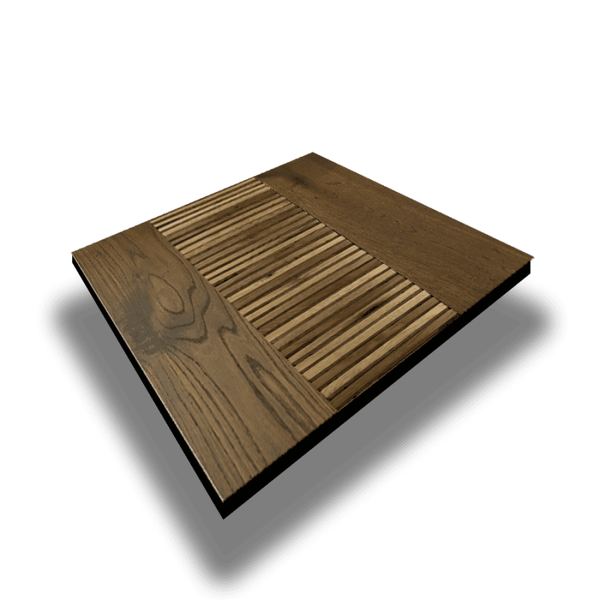
Flexible timber slats that roll back for full access to the trench, finished to match your flooring.
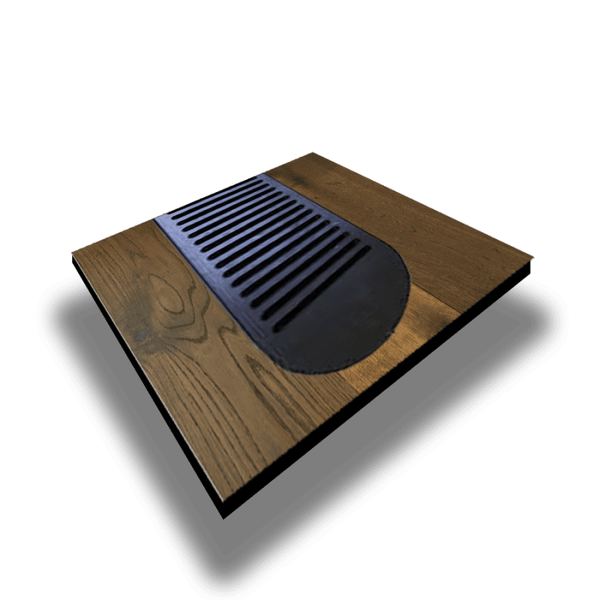
A fine, uniform perforated pattern cut to length for a seamless look along the trench.
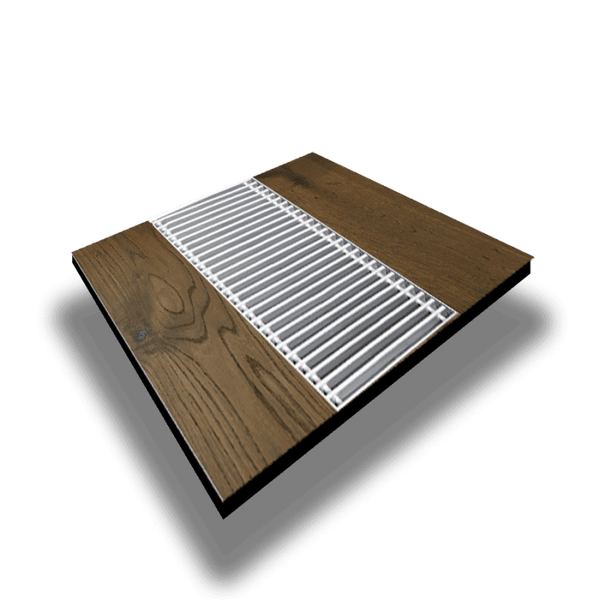
Our standard bar grille — durable, low-maintenance, and used across most installations.
01 Trench box • 02 Convector element • 03 Grille
The trench box is built by your builder, generally sized between approximately 230–320mm wide × 250–300mm deep — enough to house the convector and let air move freely beneath the grille. Finished flooring stops around 10mm short of the trench on all sides so the grille sits flush and fully supported.
The convector connects to your home’s flow and return via 16mm pex-al-pex pipe, tied into the same manifold as the rest of your dPP hydronic system.
Your builder forms the trench box during the slab or framing stage, to dPP’s specification. We then supply and install the convector, pipework and custom grille.
Trench convectors run off the same water temperature and system as your radiator panels, so warm-up time depends on the gap between the current room temperature and your target. Most rooms feel noticeably warmer within about 20 minutes, with the full target temperature taking a little longer. For the best comfort and efficiency, we recommend programming a smart thermostat (such as Google Nest) so the system is already warm by the time you need it, rather than heating from cold on demand.